
Aeroporti di Roma: how to develop an organisation of nearly 5,000 people starting from internal potential
With Skillvue, ADR found the key to making the potential of nearly 5,000 people visible — operational staff included — turning talent development into a strategic lever for growth.
Aeroporti di Roma
Transportation & Logistics
>€1B
4,500+
>55 million
Internal Mobility, Learning & Development
A rapidly growing airport needs a people strategy that holds at scale
Aeroporti di Roma (ADR), part of Gruppo Mundys, manages and develops Fiumicino and Ciampino airports with over 4,500 employees and the ambition to build "the airport of the future" on the basis of a new inclusive model.
ADR is today on a path of sustained passenger traffic growth and progressive infrastructure adaptation, requiring organisational growth capable of sustaining this expansion over time.
In this context, the organization's ability to grow at the speed of the business becomes a strategic priority. For ADR, developing and mobilizing internal human capital means being able to precisely plan coverage of critical roles, accelerate vertical and horizontal growth, and build a visible, measurable talent pipeline.
The previous model couldn't grow at the speed of the business
With the entire organisation in rapid expansion — especially during the post-Covid recovery phase — the existing development model was showing structural limitations.
The potential of nearly 4,000 people was not visible
Operational staff — the very people on whom to build the management of a growing airport — could not all be invited to a structured assessment: development opportunities started from nominations by direct line managers.
The development pipeline was not scalable
When an airport grows, the speed at which you identify and develop people becomes an operational variable, not just an HR KPI: with peaks of 2,000+ annual hires, the manual management model could not keep pace.
Without clear paths, turnover risk was real
In an increasingly competitive job market, retaining high-potential talent is not just an engagement issue, it's an investment: the higher the turnover, the more investment in months of training and knowledge is lost.
Top-down approach to development
Decisions on who to bring into deeper assessment and develop depended on direct manager nominations, not on a uniform data foundation. Unrecognised potential remained invisible.
Democratisation of development at risk
Possible perception of unequal access to growth and professional development opportunities could affect the employees' sense of trust in the process.
Compliance required stronger foundations
There was a clear intent to make every promotion decision transparent to the employee and defensible before the regulator. Auditable psychometric foundations and documentable criteria were needed.
What needed to change
Make potential visible across the entire workforce
assessment accessible to all 4,500+ employees, not just the 1,000 corporate staff. Including operational employees for the first time
Guide decisions with a science-based and auditable approach
move from subjective nominations to structured skills data for every role, with clear criteria, structured feedback for each employee, and full regulatory compliance
Scale without adding operational burden or delays
process internal applications in days instead of months, while preserving the psychometric quality a public entity requires
Build a human-in-the-loop model
the assessment must produce intelligence to support managerial decisions, not replace them. Data is used to decide better, not to automate verdicts
AI-scaled Assessment with Skillvue
Skillvue was integrated into ADR's existing People Strategy, which already included a leadership model and defined development paths. Skillvue's People Science team worked with ADR to align the platform with the company's leadership model, ensuring every assessment measured what ADR considers relevant — not generic skills.
Technical skills (role-specific, calibrated on ADR's model)
Soft skills (for operational roles too, for the first time in ADR's history)
English language (critical for an international hub with 240 destinations and 100+ airlines)
What changed and why it matters.
Measurable and qualitative outcomes from the Skillvue x Aeroporti di Roma project.
-97%
Time-to-Process
up to 4,000
operational staff included
Days, not months
application-to-screen timeline
"Assessment is no longer seen merely as a necessary step for a promotion: it is part of an integrated development system that enables the construction of personalised growth paths."
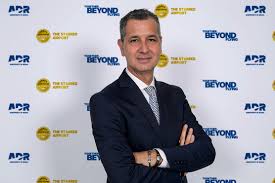
Alberto Valenza
SVP Human Capital, Organization & Procurement — Aeroporti di Roma
Hidden talent, finally visible
ADR built a data set that simply didn't exist before: people who would have remained invisible under the old approach can now be identified, assessed, and placed into development pipelines.
Extreme speed for a more strategic approach
What previously took months — to guarantee fair treatment and accuracy for every application — can now be done in days. The depth of analysis remains, but precious time is freed up for the strategic management of HR processes.
Human-in-the-loop: more data, more accountability
The assessment doesn't produce a list of approved profiles, but structured information that feeds a conscious managerial decision. Cognitive effort remains key because a data foundation that didn't exist before now needs to be read and interpreted.
Concrete impact on employee experience and retention
Employees have visibility into the criteria used for assessments and receive structured feedback on their development path. Key factors in a context where competition for talent is intense and threatens operational continuity.
From internal development to an integrated talent strategy.
When the model tested with Skillvue proved it could hold at scale, the next question was natural: does it make sense to assess new hires with different criteria than those used to develop existing employees? The answer was no.
Build a single coherent cycle where every person, from day one, is assessed, guided, and developed with the same logic.
Continuation of the development model already underway internally
Integration into external Talent Acquisition